
Ranil Wickremesinghe was on Wednesday elected as Sri Lanka's new President by Parliament, in a rare move that could provide continuity for ongoing discussions with the International Monetary Fund for a bailout for the cash-strapped nation but a development likely to anger anti-government protesters who have been demanding his resignation from office for weeks.

The IMF and World Bank have stopped loans, and the FATF warned its 39 member nations to block Taliban assets.

Of the 23 companies, eight have raised funds after Shark Tank India.

Japanese tech investor SoftBank may end up investing around $1 billion in India in 2022, nearly a third of what it did last year, according to people closely tracking its plans. Last year, SoftBank undertook investments of $3.2 billion in 12 deals. In the first five months of CY22, the giant investor has invested $400-500 million in five deals.

The RBI said there is an upward bias on inflation projection.
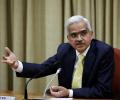
The Reserve Bank remains laser-focused to bring back retail inflation to 4 per cent over a period of time in a non-disruptive manner, Governor Shaktikanta Das stressed while voting for status quo in interest rates, as per minutes of the October policy meeting released on Friday. The central bank has been mandated by the government to ensure the Consumer Price Index (CPI) based inflation is at 4 per cent, with a band of 2 per cent on either side. The retail inflation, which was above 6 per cent during May and June, has started moving down and stood at 4.35 per cent in September.

Assam Chief Minister Himanta Biswa on Tuesday said that the Centre is likely to sign a peace accord with militant organisations from the state's Adivasi communities within September.

Moody's Investors Service on Thursday slashed India's economic growth projection to 8.8 per cent for 2022 from 9.1 per cent earlier, citing high inflation. In its update to Global Macro Outlook 2022-23, Moody's said high-frequency data suggests that the growth momentum from December quarter 2021 carried through into the first four months this year. However, the rise in crude oil, food and fertilizer prices will weigh on household finances and spending in the months ahead.

We have not suffered such huge price shocks across so many basic commodities, at the same time, in decades. Has the inflationary impact of all this been factored into stock prices as yet, asks Debashis Basu.

'Overall, domestic demand has moderated significantly. 'The weakening of private consumption, which for long has been the bedrock of aggregate demand, in particular, is a matter of concern,' RBI Governor Shaktikanta Das said in the MPC meetings, in October.

At interactions last week with senior officials from the Reserve Bank of India, select banks gave feedback on two key bond market concerns, namely, recent volatility in the rupee-dollar exchange rate and heavy losses incurred on floating rate government bonds due to a demand-supply mismatch, sources told Business Standard. The discussions were held ahead of the RBI's next monetary policy statement, scheduled on August 5. Indian banks are large holders of government securities because of a regulatory mandate to set aside a certain percentage of deposits in sovereign bonds.

The RBI left key policy rates unchanged and cut the GDP growth estimate for this fiscal to 5.5 per cent from 5.7 per cent.

Inflation trajectory, domestically as also globally, is what will shape the economy, and therefore the market, over the next couple of quarters.'

'Waiting for a market correction and optimising entry time in the markets will be akin to missing the woods for the trees.'

This pertains to certain irregularities in loan disbursements towards the development of two Slum Rehabilitation Authority projects undertaken by the company in the past.

Supertech Managing Director Mohit Arora said the company will file a review petition in the SC.

It is significant that the PM's appeal to invest in India comes at a time when the global economy is facing a difficult phase

IMF Chief Economist Gita Gopinath also said the pickup in global growth for 2020 remains highly uncertain as it relies on improved growth outcomes for stressed economies like Argentina, Iran, and Turkey and for under-performing emerging and developing economies such as Brazil, India, and Mexico.

'We continue to believe that the global economy will narrowly avoid a recession, despite expecting the US, Canada, and most of Europe to fall into recession at some point over the next year or so.'
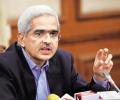
Softening inflation, Das said would make available more policy space to the central bank to address risks to the growth going forward.

With just over a month to go for assembly elections in Goa, political observers feel the Congress may upset the Bharatiya Janata Party's plans for retaining power in the coastal state, but appear less enthused about the Trinamool Congress, whose entry has added colour to the poll campaign.

Experts say this is a good time to buy a house for self-use, points out Sanjay Kumar Singh.

Emerging markets such as India have always run higher inflation rates than developed economies such as the US and countries of Western Europe. But for the first time in the past 30 years, the US reported a higher consumer price inflation (CPI) rate than India in five consecutive months. The US reported a CPI rate of 7.5 per cent in January 2022 against 6.01 per cent in India and analysts expect the trend to continue for at least a few months more

'Pump prices of petrol and diesel have reached historical highs. An unwinding of taxes on petroleum products by both the Centre and the states could ease the cost-push pressures,' the Monetary Policy Committee (MPC) has said.

Investors' wealth jumped over Rs 59.75 lakh crore in the 2021-22 fiscal, helped by a largely buoyant trend in domestic stocks with benchmark index Sensex surging over 18 per cent during the period. Braving many headwinds in the latter part of the current fiscal, Sensex closed the 2021-22 financial year with a gain of 9,059.36 points or 18.29 per cent. Mirroring optimism in equities despite worries related to geopolitical tension, inflation concerns, FII selling, the market capitalisation of BSE-listed firms rallied by Rs 59,75,686.84 crore to Rs 2,64,06,501.38 crore in the entire 2021-22 fiscal.
Battling a sharp surge in inflation, the Reserve Bank is all for a smooth monetary policy response and the desire to have smaller hikes led it to tighten the policy in an off-schedule meet, a source said on Thursday. Inflation has been massively impacted by Russia's invasion of Ukraine and will in due course also reflect the dent caused by Indonesia banning palm oil exports, the source aware of central bank thinking said, indicating that there was no other option but to respond. "The idea is to have a smooth policy response, not to put in large cold turkey responses," the source said, making it clear that the preference is for smaller magnitude responses and not larger ones.

'While there has been an impact on economic activity, it is not as profound as the lockdown last year.'

The V-shaped rebound has been aided by a gush of liquidity flooding the global financial system, thanks to balance sheet expansion.

'When you need to revive the economy, when you need to revive aggregate demand, you cut taxes.' 'But what's this government doing?' 'It's increasing taxes for the middle class and the vast majority of the poor on fuel, which has a ratchet effect on most other products.'
Indian capital markets joined the global sell-off sparked by China growth concerns

So which sectors are likely to do well in 2022? Should you focus on domestic economy-related sectors or export-oriented ones?

From the enactment of the capital control Act to the recognition of the BSE as a stock exchange and the infamous Harshad Mehta scam, here are the 18 biggest events for stock markets from 1947 to 1993.

Expressing the government's commitment to continue with reforms, Finance Minister Nirmala Sitharaman on Thursday assured India Inc that it is ready to do everything required to revive and support economic growth hit by the COVID-19 pandemic. Stressing that there is a need to promote growth as it helps bring down poverty, she however said it would not be at the cost of inflation. RBI has been mandated to keep inflation at 4 per cent, with tolerance level of 2 per cent on either side.

Investments in Indian capital market through participatory notes (P-notes) dropped to Rs 94,826 crore till November-end after hitting 43-month high in the preceding month. P-notes are issued by registered foreign portfolio investors (FPIs) to overseas investors who wish to be a part of the Indian stock market without registering themselves directly. They, however, need to go through a due diligence process.

The government's programmes should be expected to generate some momentum, but the macro-economic numbers are not encouraging, observes T N Ninan.

The most popular benefit across all demographics is company health care programs to compensate for the increased costs of medical care.

'It is far too early to celebrate the numbers.' 'They are still fairly weak compared to the pre-pandemic level.'

'In AAP, those who are in charge of a particular state provide information to Arvind Kejriwal. 'In the BJP, several organisations convey what is happening on the ground to the top leadership.' 'There are so many channels through which issues are being understood.'

While a coordinated aggressive monetary easing from the central banks is most likely to offer some respite in the near-term, it is unlikely to improve the sentiments.

The Adani group has the maximum number of companies in the trillion club at five, followed by the Tata group (four).
